We didn’t sail further south than Manzanillo since it is more than 800 nm from Manzanillo to San Carlos where we will haul Capri and put her on the hard from June 15 to October 20 (the hurricane season). Our boat insurance (Pantaenius) doesn’t cover damage by hurricanes or named storms if the boat is closer than 30 from the equator. Marina San Carlos is right on the edge at 29 degrees 40 minutes north. In other words, if she gets hit – we are self-insured.
It is extremely rare that hurricanes or named storms hit San Carlos. A hurricane that runs up the western coast of Baja can send winds of storm force here though. There are no reports of damage to the boat on the hard as the storage area is a mile or so inland and lies fully protected by the mountains. San Carlos is a popular place to haul your boat – there are more than 400 boats on the hard here.
Right now, we are at anchor in the bay outside San Carlos Marina. This is a gorgeous anchorage, surrounded by hills and mountains. We will stay here while we take off Capri’s sails, bimini, sprayhood and get her ready to haul.
This blog is about Copper Canyon, but a bit about our sail from Mazatlán.
The weather gods simply have not been with us. All our pilot books have told us that the predominate winds will change from the northeast to southeast/west in early spring. Unfortunately, that isn’t happening, meaning we are sailing upwind most of the time, true Vinni and Carsten weather. Every day northward is a slog directly against the wind and the swells. We had to plan our 800 or so nautical miles from Mazatlán and find a weather window where there was no wind and calm seas. That, of course, means we were sailing on the engine, not the sails. Damn it – we have a sailboat and prefer to use the wind!
All the cruisers we have spoken with down here are surprised at how much we all motorsail, either because the wind is so strong (meaning we stay on the anchor or in the marina and wait) or else there is little to no wind. This is an expensive way to travel since diesel is expensive. Capri’s bottom also fouls here much faster than we have ever seen. The Sea of Cortez is infamous for fouling boat bottoms, but this is ridiculous. We lose between 1-1.5 knots or more as our bottom fouls. Most of the cruisers down here get their bottom cleaned every month. We’ve had Capri cleaned twice since we got here at the beginning of December. It is not only speed we lose, our axel and propeller become encrusted with barnacles and that means they spin out of true with resultant wear on our bearings etc. We can literally feel the shaking when we sail. After an hour or so, the shaking lessens as the propeller throws off some of the barnacles, but much of the growth is still there.
The last time we had the bottom cleaned it took four divers an hour to clean her up completely, but she was also very fouled. Capri flew through the water the following week and then we could begin to feel her speed deteriorate as her bottom fouled once again.
Our plan was to stop in Topolobamp on our way from Mazatlán to San Carlos. Here we were going to take the bus to Los Moches and then climb aboard El Chepe, the train that runs through Copper Canyon on its way to Creel.
The Mexican authorities are stringent about opening and closing their harbors due to weather. Mazatlán is especially so, particularly these days. We’ve heard of one sailboat skipper that did not obey the “Red Flag” and when he made the next harbor, the police were waiting with a $6000 fine. We heard about these rules when we got to La Paz, but thought they were only for pangas and other small fishing boats – not ocean going cruisers like us.
Mazatlán is probably being especially careful after a 45 foot sailboat left in March bound for Cabo San Lucas on the other side of the Sea of Cortez. The boat went down without a trace and all three of the crew were lost. The Sea of Cortez can be challenging sailing, particularly when the weather turns nasty. The authorities said that the winds were gale strength and there were 5-6 meter swells in the Sea when that boat went out.
The owner of the boat had it on the hard for three years in Mazatlán and apparently had not gotten the boat properly ready for sea. The owner had a reputation for being an “old sea dog” who eschewed electronic navigation, preferring paper charts and his sextant. He had no Epirb or sat telephone on board and therefore his only means of communication was his VHF. A VHF has a range of about 20nm so once out in the Sea, unless there was a passing boat – he could not issue a distress call. Once the boat was overdue the Mexican Coast Guard spent many days searching for wreckage with no results.
A sad reminder to all of us that the ocean is a dangerous place, not to be taken lightly. The need for proper boat maintenance and passage planning becomes obvious when something like this happens.
Copper Canyon
Many have told us not to miss seeing Copper Canyon, saying it is more impressive than the Grand Canyon, which is saying a lot.
El Chepe is the first train that Carsten and I have been on in a long time with plenty of legroom. Our conductor is apparently also a tour guide. His name is Roberto and a handsome devil (Vinni’s words) who easily charms all the ladies.
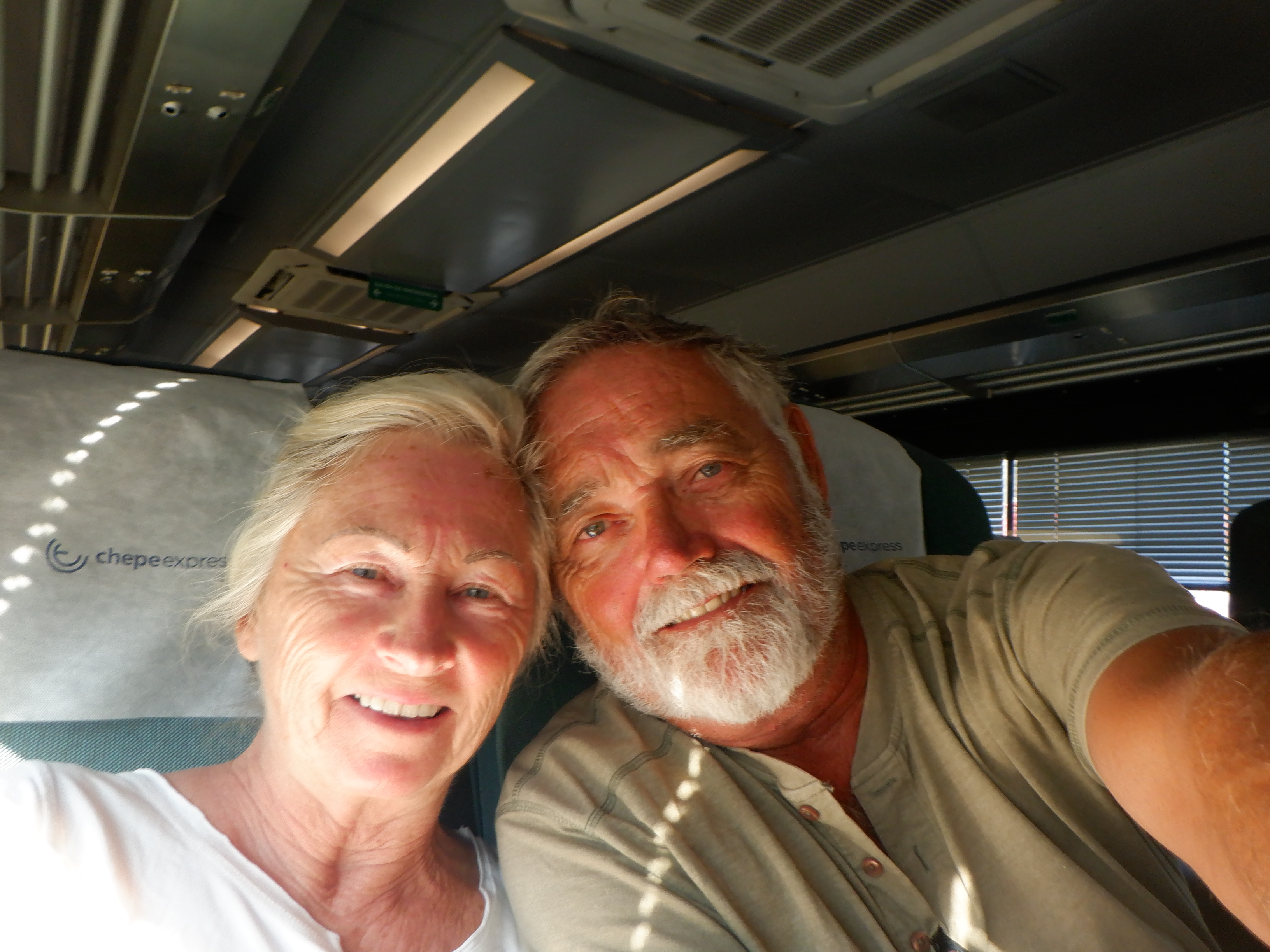

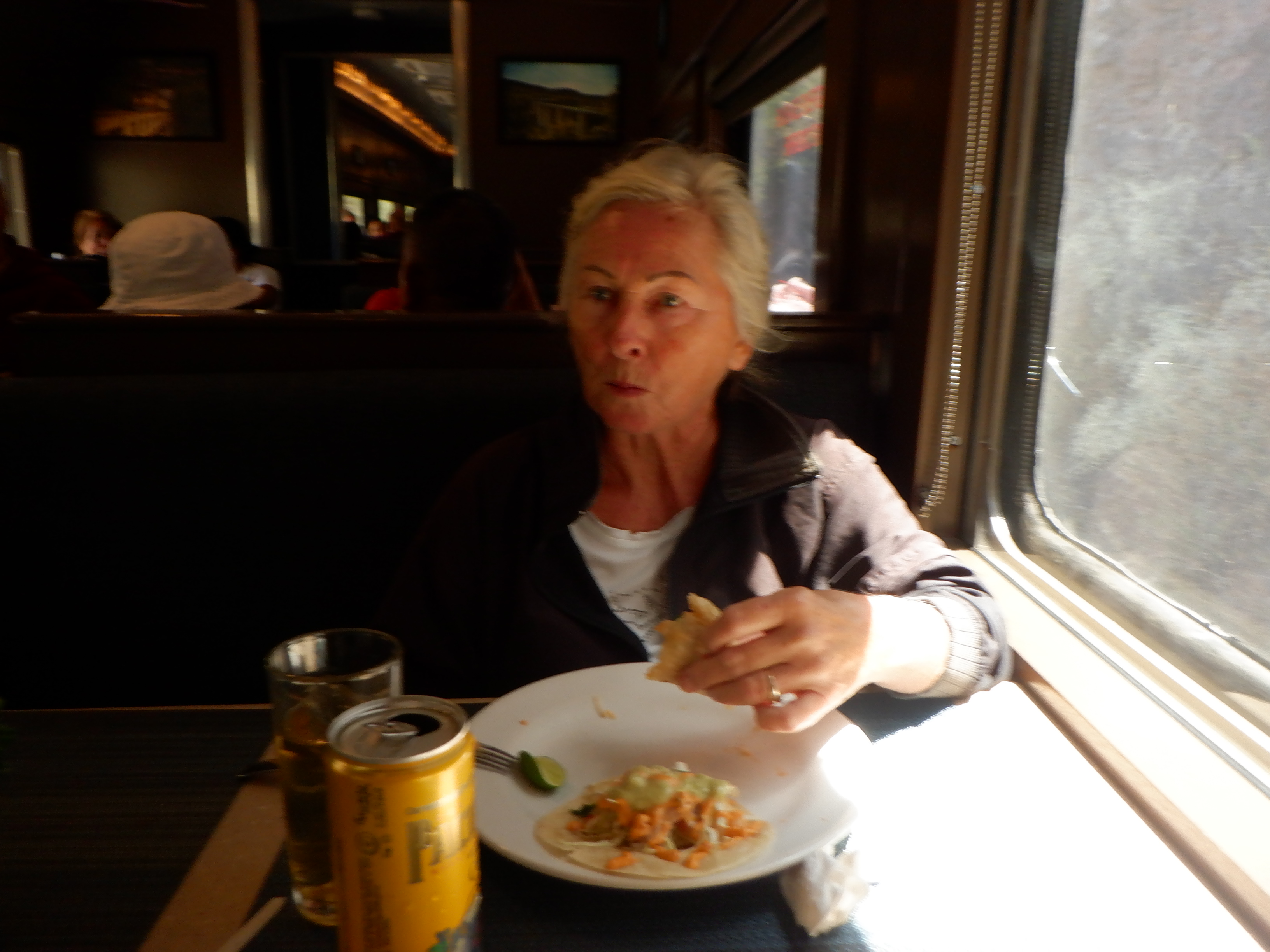
Roberto talks and jokes for almost the entire ten-hour train ride and he must be funny since he has the whole coach laughing and applauding. Most of the passengers today are women, only a few men. Our Spanish is non-existent; fortunately, Roberto speaks passably good English and translate for us when we are passing something of interest. Despite that, I have to admit that since we can’t understand what he is saying, his ten-hour monologue becomes tiring and by the time we reach Creel we are worn out.
The ride is fascinating though. The first several hours we rode through the flat and poor agricultural part of Mexico, a piedmont if you will. The population here lives a Spartan existence, with shacks as housing and yards filled with discarded appliances, cars you name it. There are few cities or town here – villages are as large as it gets. Up til now, we have only seen Mexico from the coast and its coastal towns and cities. Coastal and inland Mexico are vastly different. In the coastal cities and towns, there are many tourists, not only American and Canadian tourists, but also Mexican tourists. We wonder what these people live on in this barren landscape. The earth is desert-like with cacti and scattered scrub grass. The people here have to eat and drink water – but we see no streams or rivers here. Their simple shacks protect them against the sun and wind, but what happens when the rainy season starts?
The trains first stop is a town named El Fuerte – this is where all the women passengers climb on board. When we drove to Los Moches from San Carlos we drove by road signs pointing to El Fuerte. In other words, if we had but known, we could have saved several hours driving and paid less for the train ticket. El Fuerte is supposed to be a charming old Spanish village and worth a visit. For those that are historic, legend has it that Don Diego del a Vega, also known as Zorro, came from El Fuerte before he moved to California. None of the praise for El Fuerte applies to Los Moches. Los Moches is simply a modern city with little to recommend it.
After some hours, the train begins its ascent into Copper Canyon. Copper Canyon is a complex of six enormous canyons that have their confluence here. The guidebooks do not agree on the number of canyons that are here, some say six, some seven, a few nine. Copper Canyon stretches over and area 1.5 times the size of Grand Canyon and is about 1.5 kilometers deep where the Grand Canyon is “only” one kilometer deep. We will also pass the only train tunnel in the world where the tracks make a 180 degree turn (inside the mountain) to gain altitude.
Ten hours after leaving Los Moches, the train pulls into Creel. Most of the passengers will disembark here, although some will continue onwards to Chihuahua. We have booked ourselves into a small hotel by the station. Their website says that the owners speak excellent English and are extremely helpful with booking tours for their guests. This is a charming little hotel with only eight rooms. The wifi functions perfectly (surprise, surprise!) and the room is clean and modern. The breakfasts are gigantic, carbohydrate loaded bombs and unhealthy as all get out – but they taste fantastic. We scarf it all down and can feel the kilos settling around our love handles.
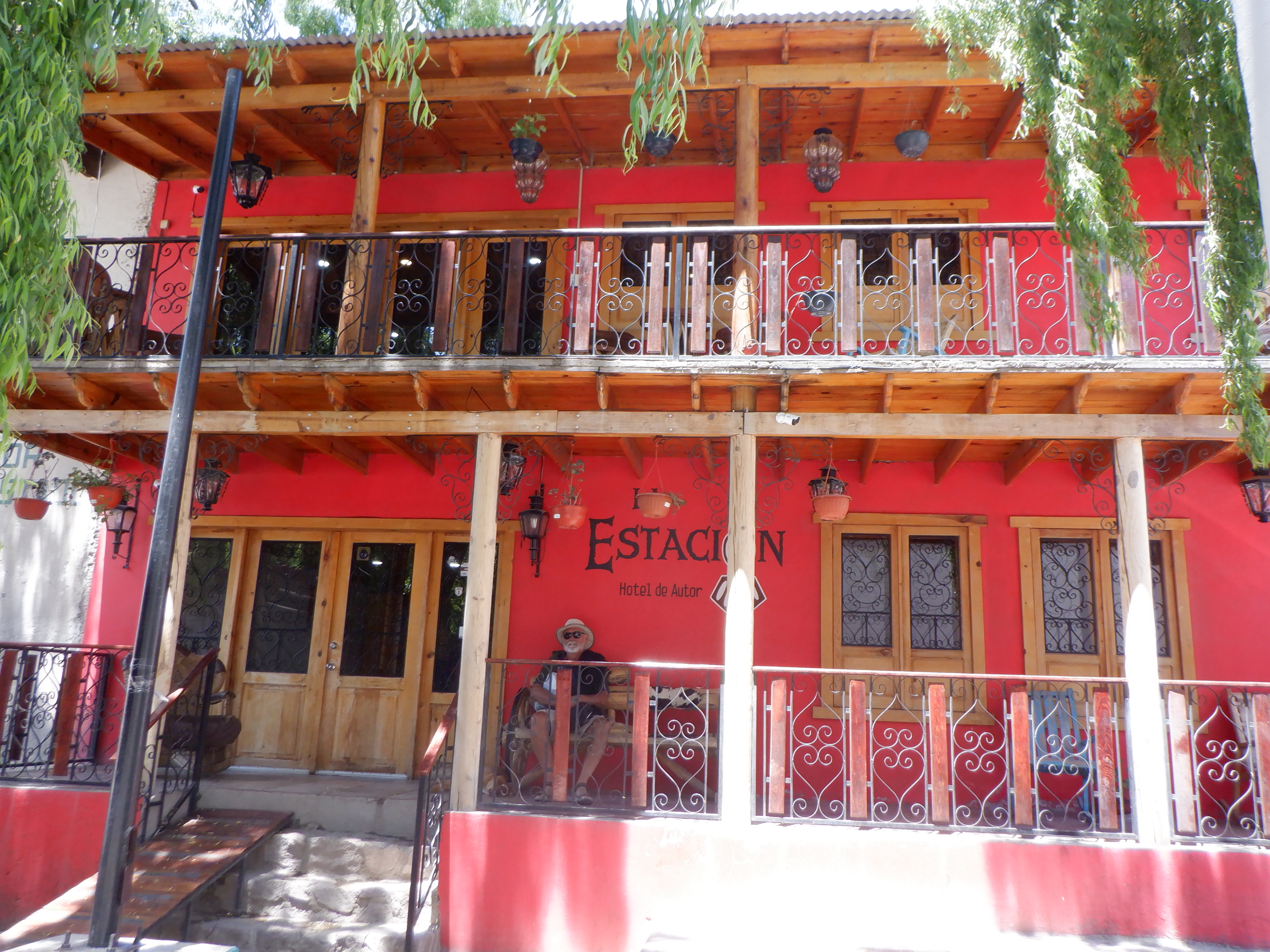

The receptionist and the cook are attentive and just as helpful as can be, but unfortunately, they speak not one single word of English – uh, Houston we have a problem! Google translate to the rescue. Amazing how easy it is to use – just talk into the phone and it translates on the spot. If we can’t understand a menu or something else that is written, we can simply hold the phone up, point the camera and Voilà, ti si translated. Most Mexicans we have met here have a smartphone and are quite used to using google translate.
Our receptionist gives us a phone number to Caesar, a local guide who speaks excellent English. He lived in the US for two years when he was younger so language is not an issue.
Out first day in Creel, we decide to trek out to see some local places of interest. As we exit the hotel, we see our first Tarahumara Indians, sitting on the plaza selling their crafts to the tourists.

It is a long trek out to the Tarahumara lands. We’re going to see the San Sebastian Cave, an indian dwelling that, while not in use today, is exactly as it was when it was in use. A not insignificant number of Tarahumara still live in caves, as they are perfectly suited for dwellings in this climate.
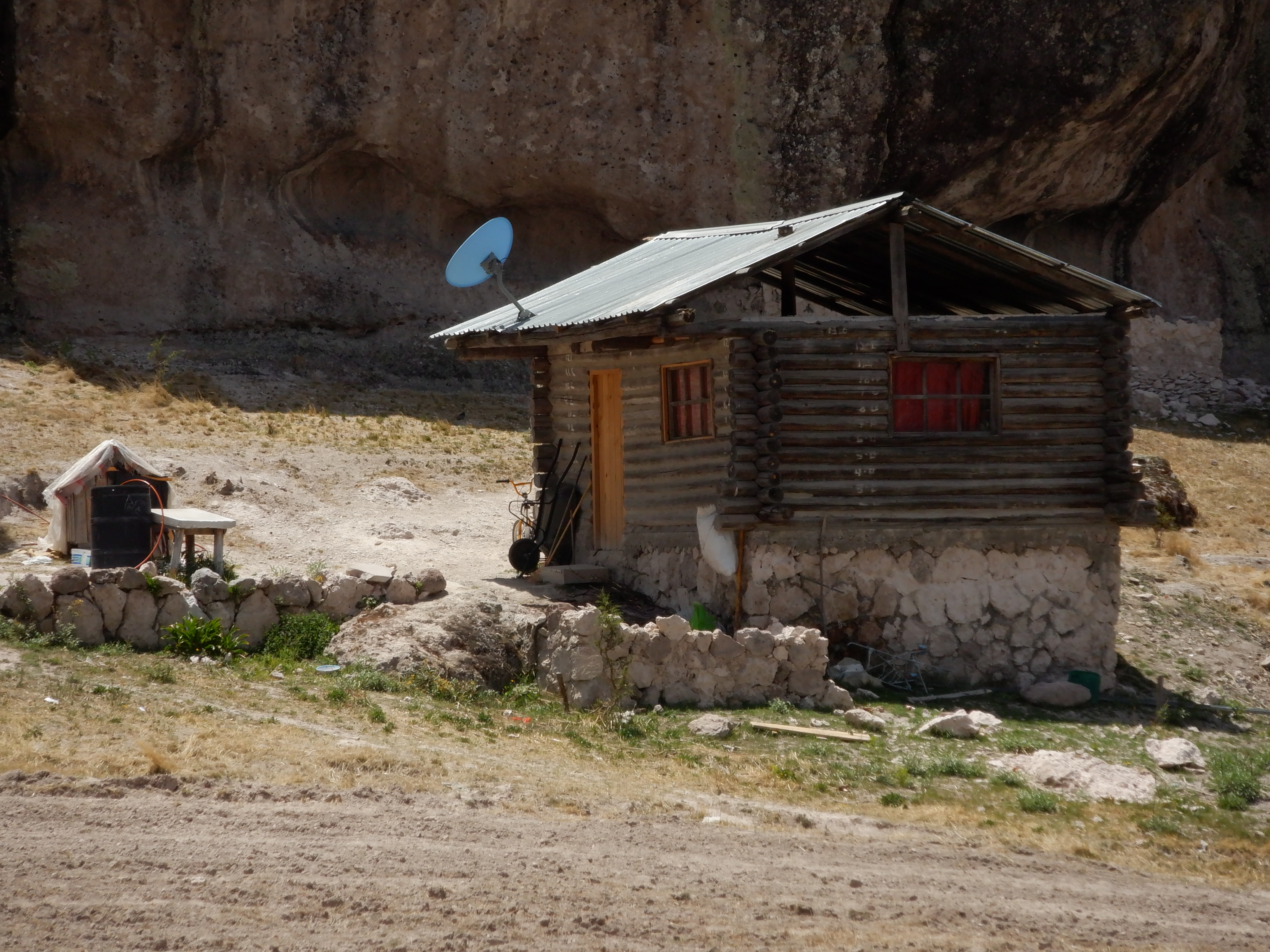
That evening we met with Caesar and agreed on three guided trips.
- Batopilas, a historic town at the bottom of one of the canyons. Batopilas is famous for many things, one of which is that a drug cartel seems to have its headquarters there. We asked Caesar if it was dangerous since we read in one of our guidebooks that frequently the narcobarons lifeguards are walking around with their AK47’s. Caesar says it normally isn’t a problem, he is known by the locals and from Creel. He does tell us explicitly not to say the word “cartel” while we are in town. The locals may not speak English, but they do recognize that word. He also says that the local hotels and the mayor have asked the “godfather” not to discourage tourism, so he has told his bodyguards not to carry their machine guns publicly.
Caesar admits that Mexico is a thoroughly corrupt country. The current president is not popular because he, amongst other things, ended free medical care. The Governor of Chihuahua province is completely corrupt and paid off by the cartels, that have thoroughly infested every aspect of society. The cartel that runs Creel has done some good for the city. IN the past, the city was plagued by robberies and rapes. These are rare occurrences these days. The cartels find and execute anyone that tries it. It sounds like Sicily and the mafia.
Early the next morning Caesar picked us up and we drove almost 5 hours through an impressive landscape down to the canyon floor. This is at least as impressive as the Grand Canyon, each in their own way. At the Grand Canyon, you can only drive along the rim, if you want to go to the bottom, you have to walk (or use a helicopter). Here, a couple of roads go into the canyons. While there aren’t many trekking paths, it is possible to hire a Tarahumara guide, although they walk so fast that most have trouble keeping up with them. Carsten will write a separate blog about the Tarahumara, because our meeting with them was almost like time travel. They have not changed their way of living much in the past several hundred years.

After almost 5 hours in the car, we reached the canyon floor and Batopilas. Before crossing the bridge into town, we are stopped by a machine gun totting policeman. He wasn’t part of the cartel (we think), but it probably wouldn’t have made any difference. No policeman comes here alone unless the cartels know him. He recognized Caesar and we were let in without difficulty.
We thought Copper Canyon was called that because they mined copper – not true. The name comes from the color the canyon cliffs get as the sun goes down. There are however, many gold and silver mines in the canyon. Some of them are still active. This morning we saw a train come through creel with armed guards sitting on top of each freight car. Almost certainly because the train was carrying silver or gold ore to Chihuahua.
We were also surprised that El Chepe had armed guards on board when we rode with it. Caesar told us that about 20 years ago an armed band of robbers boarded the train and robbed all the passengers, killing two when they resisted. The Mexican Army finally found them and executed them. Since then, the train company has armed guards so it doesn’t happen again.
Batoplias is known for its silver mines that were the richest in the world. Over 360 million ounces of bullion were mined here. The last of the silver mines in Batopilas closed in the late 1960’s as the ore was played out.

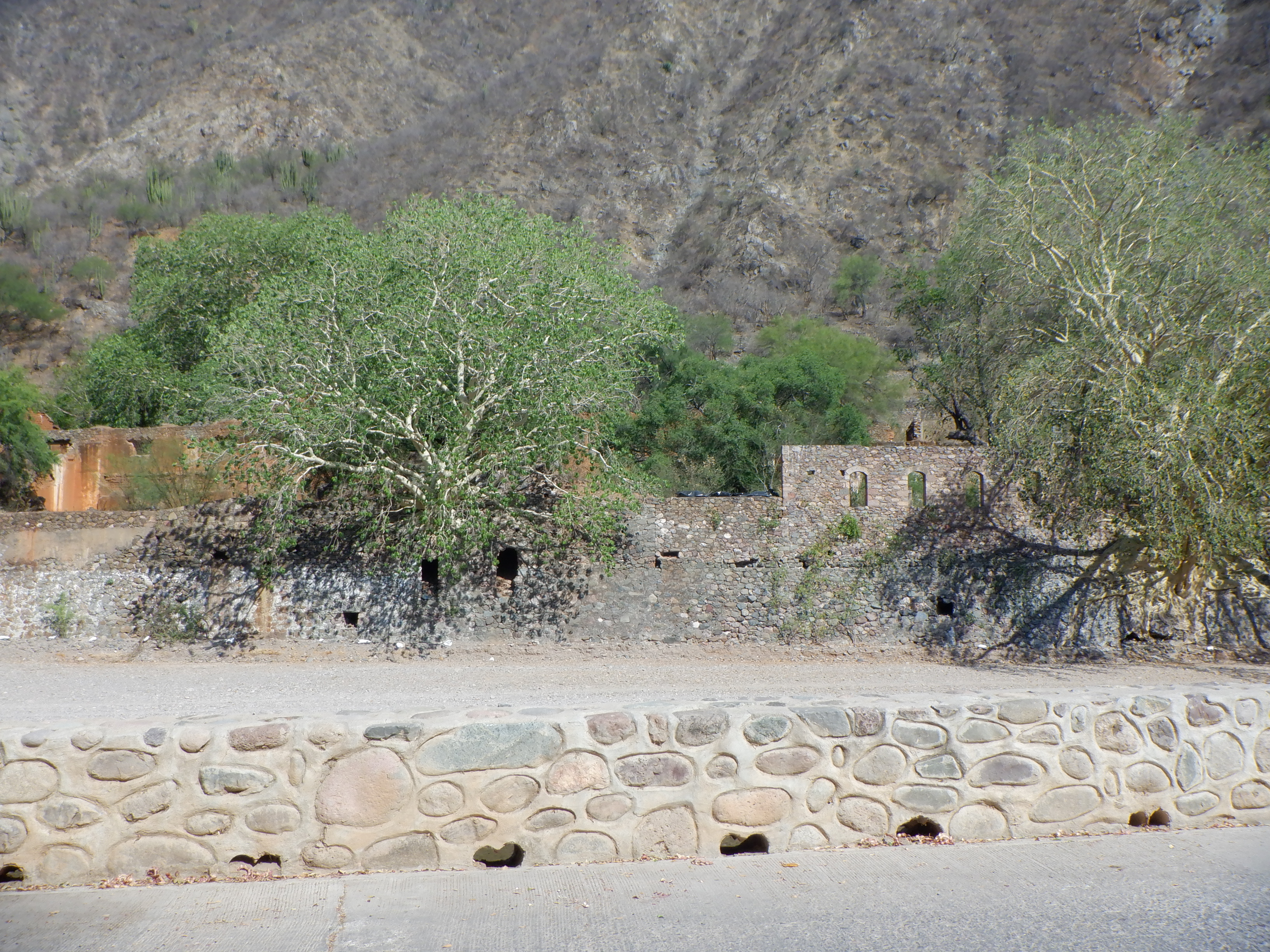

There are two main streets in Batopilas, one leading in and the other leading out. The town changes dramatically as we drive further in towards the center. Here at the outer edge, the houses are small and Spartan row houses. This is where the mine workers lived. Many Tarahumara were used as slaves in the mines, Most Tarahumara fled deeper into the canyons to avoid this fate. As we continue into town, the houses get bigger and fancier. Here the mine engineers and the nobility lived. These houses are still well maintained.


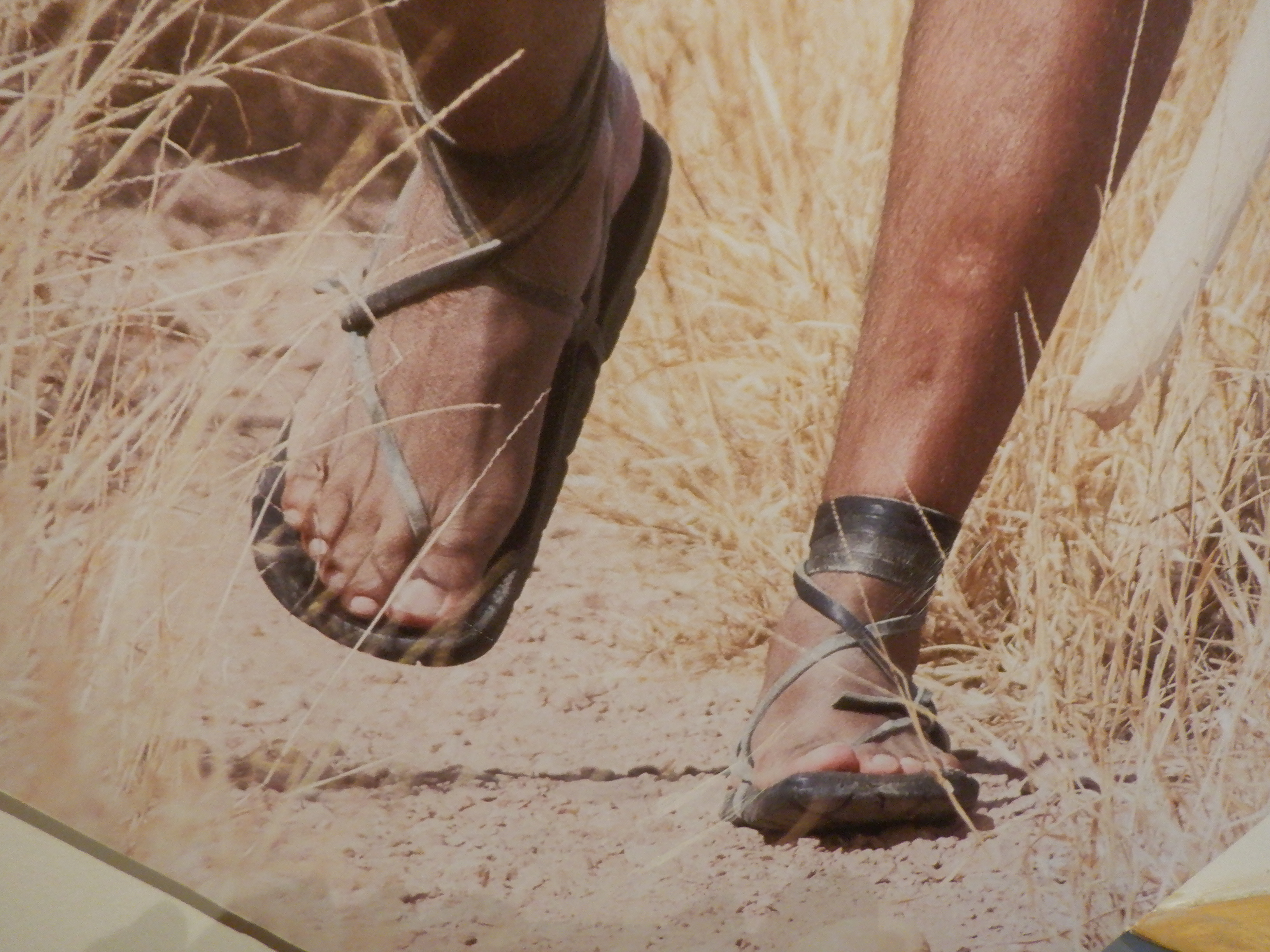
Here in Batopilas we see the same colorfully dressed Tarahumara. The women are in fancy long dresses, the men still wear a loincloth with their shirts. Shoes are the huaraches, sandlas made of old tires.
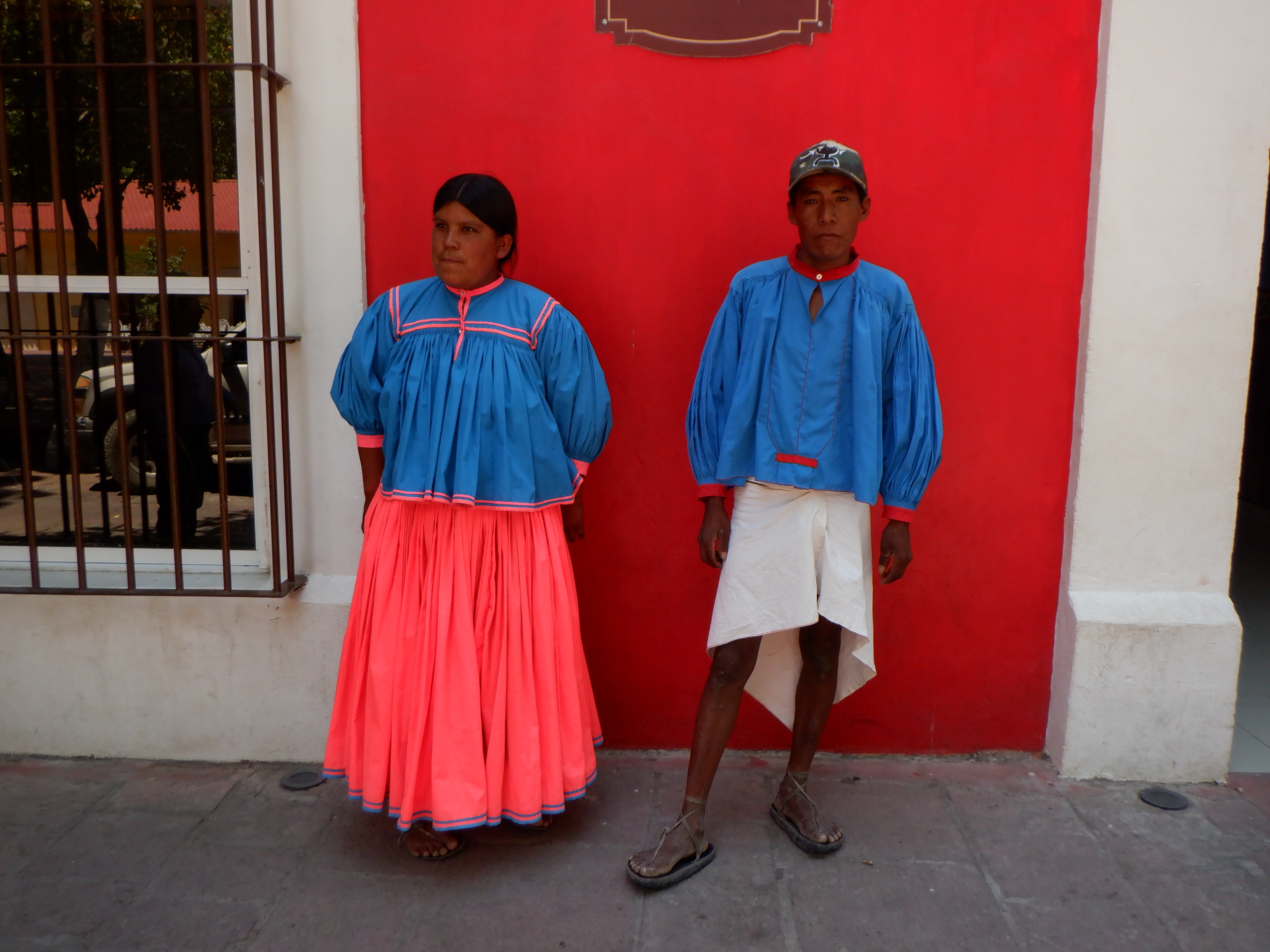
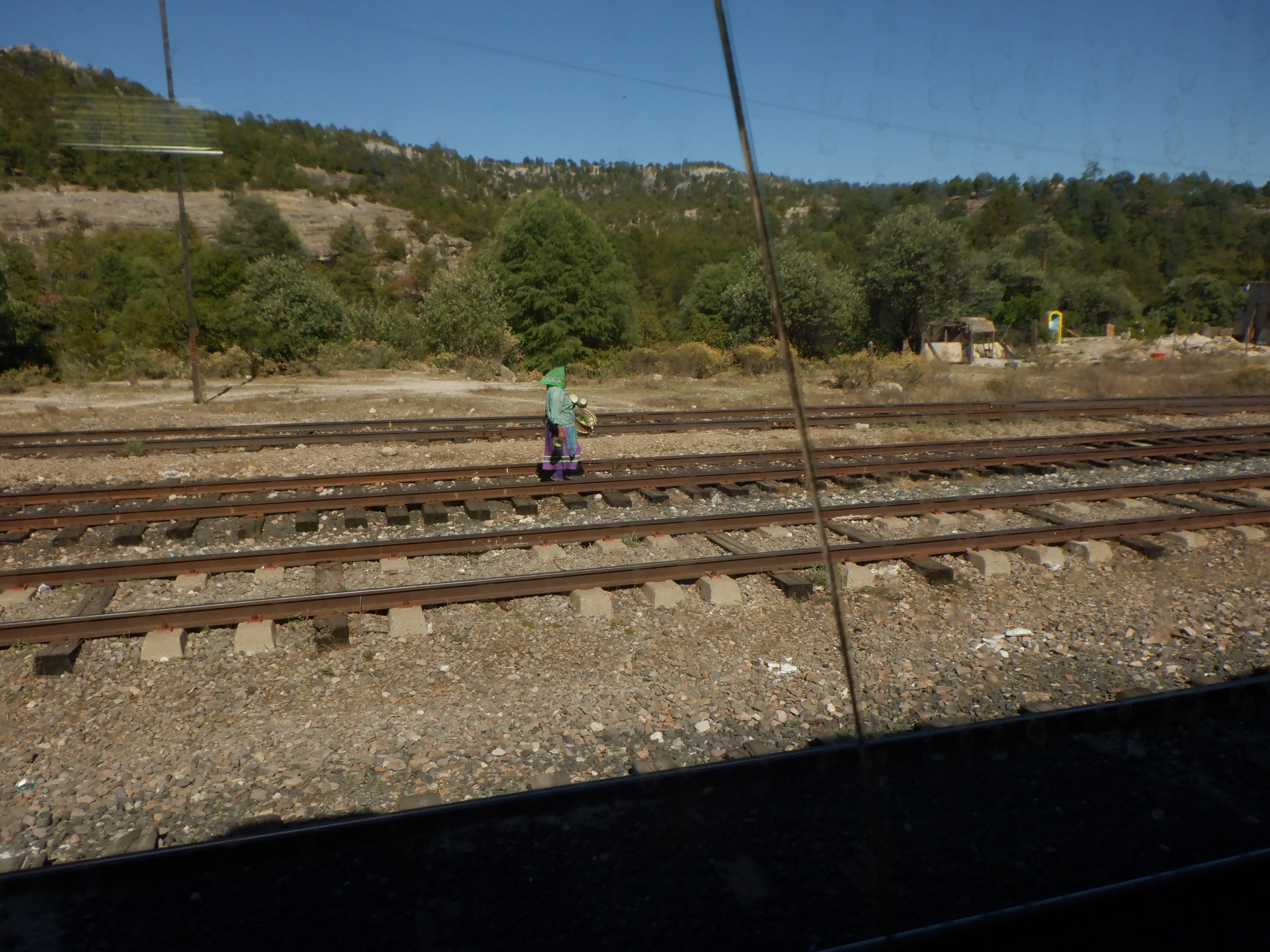
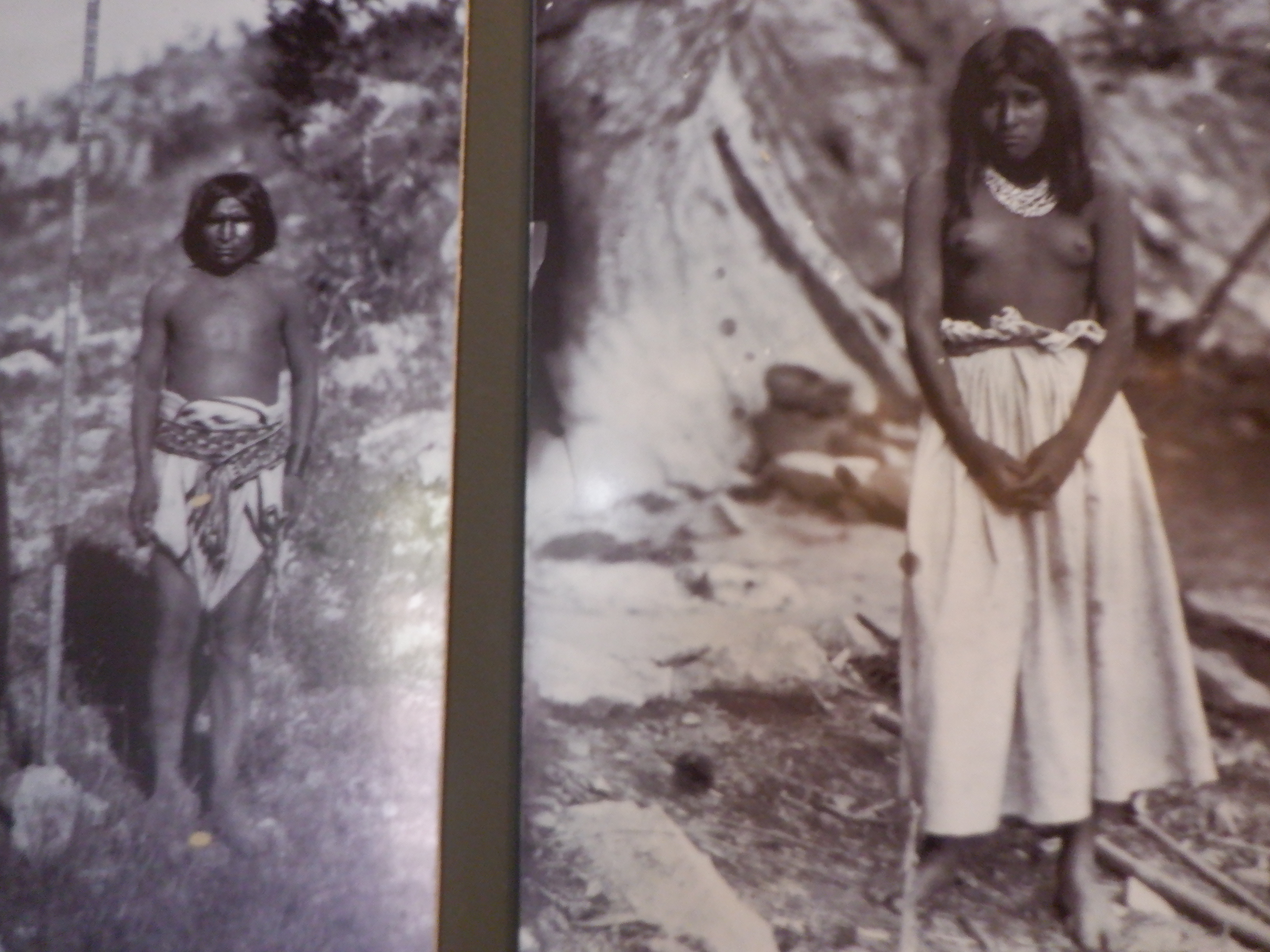
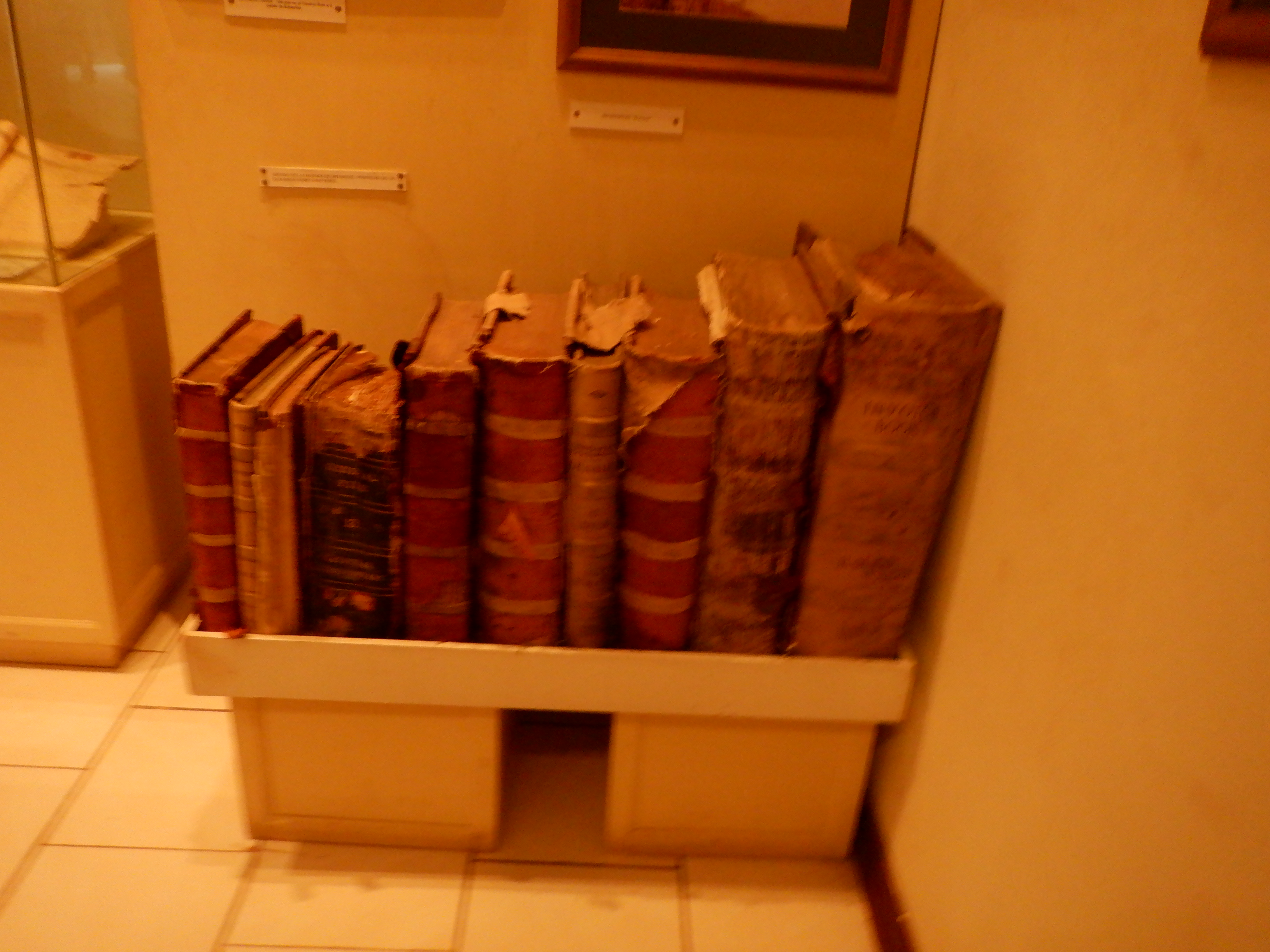
Caesar parks on the main plaza in front of the town’s museum. Everything in the museum is in Spanish, but the museum inspector does a great job of explaining everything is a grand mix and English and Spanish. When his English fails him, Caesar translates. When the mines were in full swing, Batopilas had a population of over 50,000. Today, the population is only 1100, 70% of whom are Tarahumara.
Once a year the town celebrates its mining heritage by recreating the sliver mule train from Batopilas to Chihuahua. In those days, there really were no roads, only trails and all the silver and gold came out by mule train. Each mule carried two ingots, weighing 70 kilos. These transports were large, not only because they needed extra mules in case a mule slipped and broke a leg or fell into the gorges, but also many guards etc. Bandits were rampant and even Pancho Villa tried to rob the silver train. Today the mules carry fake silver ingots and there is no need for an army of guards. It is a tradition and very popular, with enormous festivals at Batopilas when the mule train leaves and in Chihuahua when it arrives at the bank. The riders wear period costumes and the ride takes several weeks as they camp along the way.


After the museum, we wandered around town and ate a gigantic Mexican lunch. The drive back also took 5 hours and as we neared Creel, we were stopped at a roadblock by five heavily armed (each with an M-16 rifle and a machine gun mounted on the pick-up truck) police. They let us pass when they see the car has a couple of gringos as passengers. Caesar is clearly irritated. He says they only set up the roadblock so they can take some pictures of themselves so their boss will think they were working hard.
2 – Divisadero
Next morning Caesar again picks us up – this time our goal is Divisadero, a recreational area a couple of hours away. Divisadero lies on the edge of the cliffs with a magnificent panorama view of the canyon. Here we understand why some say this is “grander than the Grand Canyon”. The view is immense and difficult to internalize. The Tarahumara are out in force here, selling their handicrafts to the tourists – or rather, they are out in force when it is tourist season. This isn’t the tourist season so many of the booths are empty. I’m so impressed with their marvelously woven baskets and for a dollar; the one woman lets me film her as she works. The material she uses are long pine needles. In times past they used plant colors to color the needles, today they buy coloring at a store. The Tarahumara we see here all live in the canyons and some of them still live in caves.
There is also a national park here, which is very popular with the tourists as it is an activity park. There are ziplines and mountain climbing and other adventure sports. The zipline is the world’s longest at 2.5 kilometers and reaches speed of over 100 kilometers per hour. Here you sit in a harness chair and fly out across the canyon. Carsten wants to try and I’m willing, but when we read the sign it says that you have to be at least 160 centimeters high – and I’m only 157cm. So I can’t go. Carsten says if I can’t go then he won’t either.
If you are more adventurous, you can go on a combo zipline and mountain climbing. This is several ziplines and several cliffs you rappel down and climb.
Carsten and I take the gondola car out to the mesa in the middle of the canyon. When we get out to the mesa we see the younger set come flying on the zipline and we regret that we have reached an age where those types of adventures are a thing of the past. The young people would certainly have looked twice when they saw a white-haired and white bearded man come flying. Carsten would have enjoy impressing the young people.
After lunch we drove out to a waterfall without much water this time of year. The falls need to be admired not only from the top but also from the bottom. A short trip won 240 steps to the bottom. Unfortunately, we also have to climb up 240 steps and this is at 2400 meters (8000 feet). We’re sea level creatures so we are not able to saturate our lungs with oxygen at this height. We can clearly feel that in both our lungs and our legs.
This is not the tourist season here at the canyon. Actually, we see very tourists. The many booths that line the tourist attractions selling handicrafts and street food are all empty. We have the area all to ourselves – wonderful.
We’re tired after this day but still looking forward to tomorrow where we are going to a much larger waterfall via ATWs. Unfortunately ,we had to cancel that trip as Carsten was stricken with a bout of Montezuma’s Revenge otherwise known as the Tijuana Two-step. Carsten refuses to be more than a few meters from the toilet. He slept for almost 36 hours.
Thereafter he felt fine and we visited the Creel museum that celebrated the Tarahumara. When we visited the La Paz city museum, everything was in Spanish, but here all the placards had English translations, which made everything much more interesting for us.
In the late 1800’s Creel was a small village, known for its logging and mining industries. In 1907, the town incorporated and was established by Enrique Creel Cuity, the Governor of Chihuahua and a rich businessman. His father was British and mother Mexican.
Creel built the railroad for Chihuahua to Creel, giving the area its first true infrastructure and bringing growth to the area. The population increased dramatically and efforts began on continuing the railroad west through the canyon to Los Mochis and the coast. In 1972, the last spike was driven and El Chepe made its maiden trip.
This is an extremely interesting area and a wonderful trip that we can happily recommend to anyone who wants a once-in-a-lifetime experience.
San Carlos
Here we are back on Capri and will spend the next 14 days getting her ready to haul out. She will spend the hurricane season on the hard here as we go to Europe, first Portugal then Italy then Denmark and finally Greece where we will spend a month sailing the Aegean on some friends boat. Before coming back to Capri we will spend a couple of weeks in Yucatan visiting the many Mayan ruins so we will not be resting over the summer.
Our next blog will be out sometime in November


 s/v capri
This is a great post. I read and enjoy them all. Thank you for sharing your travels. Have a wonderful summer.