We weighed anchor and left Dominica with a course set for Guadeloupe. It was hard weather sailing (well, what did you expect – this is Vinni and Carsten sailing). We had waited for over a week for the weather to calm, but every time it looked as if tomorrow would be good, the weather changed at the last minute.
Our plan was to sail towards Guadeloupe but stop at Ilse de Saintes, a group of small islands south of Guadeloupe. With the inclement weather, that idea was dropped. The Saintes are supposed to be charming and very enjoyable to visit, but the anchorages are terrible when the weather is not cooperating. Especially the swells make for anchorages that are “rock and roll”. The Saintes will have to wait until we come back this way later this spring.

Pointe Pitre is the major city on the island and we dropped anchor in front of their new slave museum (which is very interesting and well worth a visit if you happen to be on Guadeloupe). The anchorage was fine, although we lay right where the cruise ships turned around to back into their slips at the cruise ship dock. You feel very small when a 30-story, 400-meter ship turns around right alongside you. You hope the helmsman hasn’t been drinking G&Ts for breakfast
We weren’t hit, nor were we really in danger of being hit. The harbor authorities are really strict about boats anchoring or sticking out into the sailing channel. If you do stick out there, you are told in no uncertain terms to move – right now! If you are not at home, the harbor boat simply ties a line to your boat and drags you off somewhere where you are not going to be in the way.
We saw one boat dragged away – it wasn’t pretty.
The anchor follies from Dominica continued here. Boats drag to both the left and right of us. It was almost a daily occurrence for us to rescue a boat going “walkabout”. Vinni and I joked that if we had collected salvage fees from all these boats then we would be rich.
Of course, we would never do that. Someday I might be Capri that decides to go “walkabout” and we will be very happy if some nice cruisers take off after her and bring her back.
Guadeloupe is France, so here are huge supermarkets with a wide assortment of everything your heart desires (wonderful to get fresh baked baguettes every morning). We drag a trolley full of food back to Capri every day. All our cabinets, freezer and refrigerator need filling. Salad, veggies, fruit, meat, bread, wine, beer – you name it we dragged it. We have visitors from Denmark coming, Torben and Kirsten, who will sail with us for 2 ½ weeks, so now we need to provision for four people, not just two. Capri sinks a bit lower in the water with each passing day as we continue to drag trollies and bags full of groceries. Finally, every nook and cranny on board is full and we can load no more.
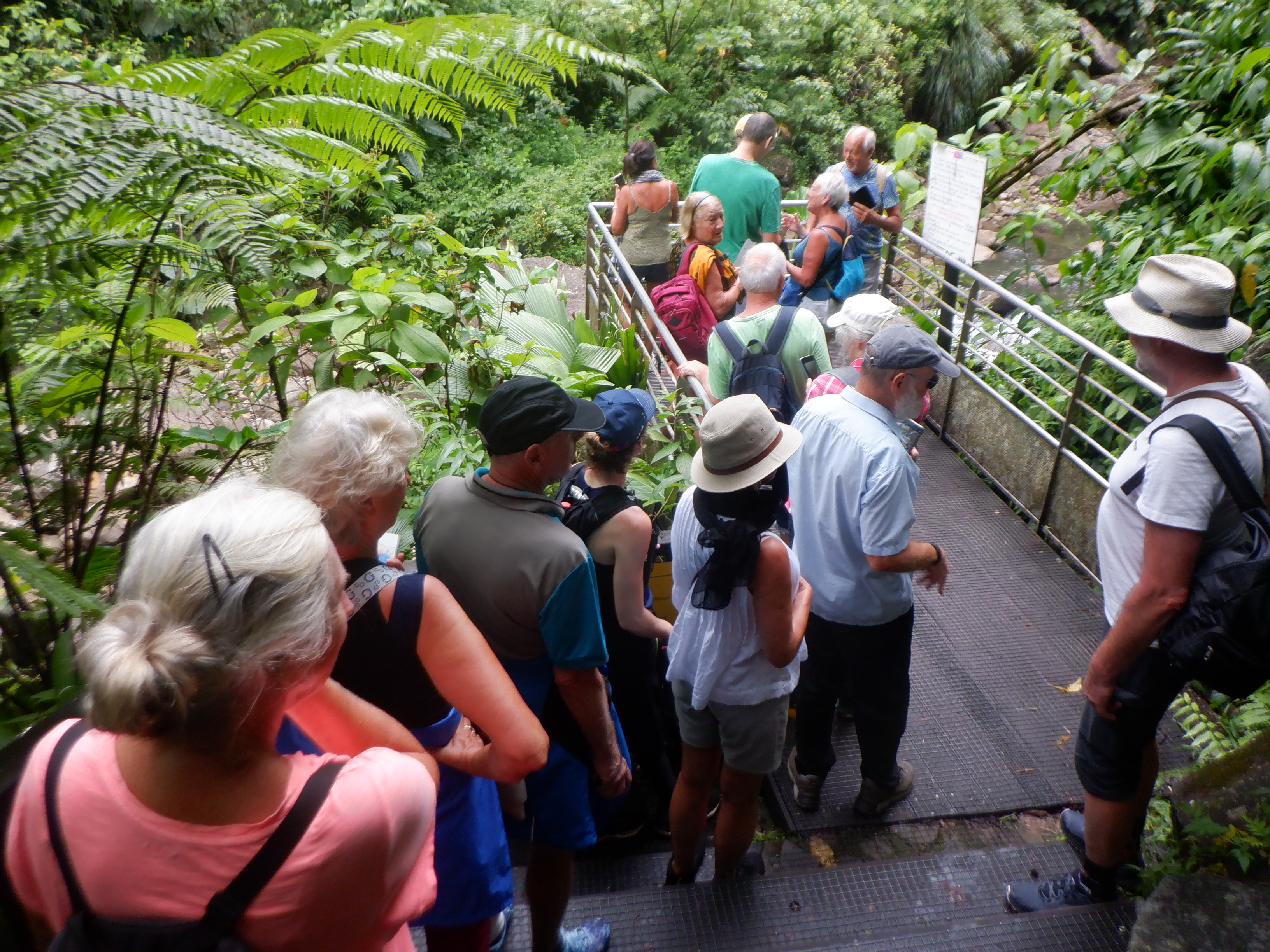
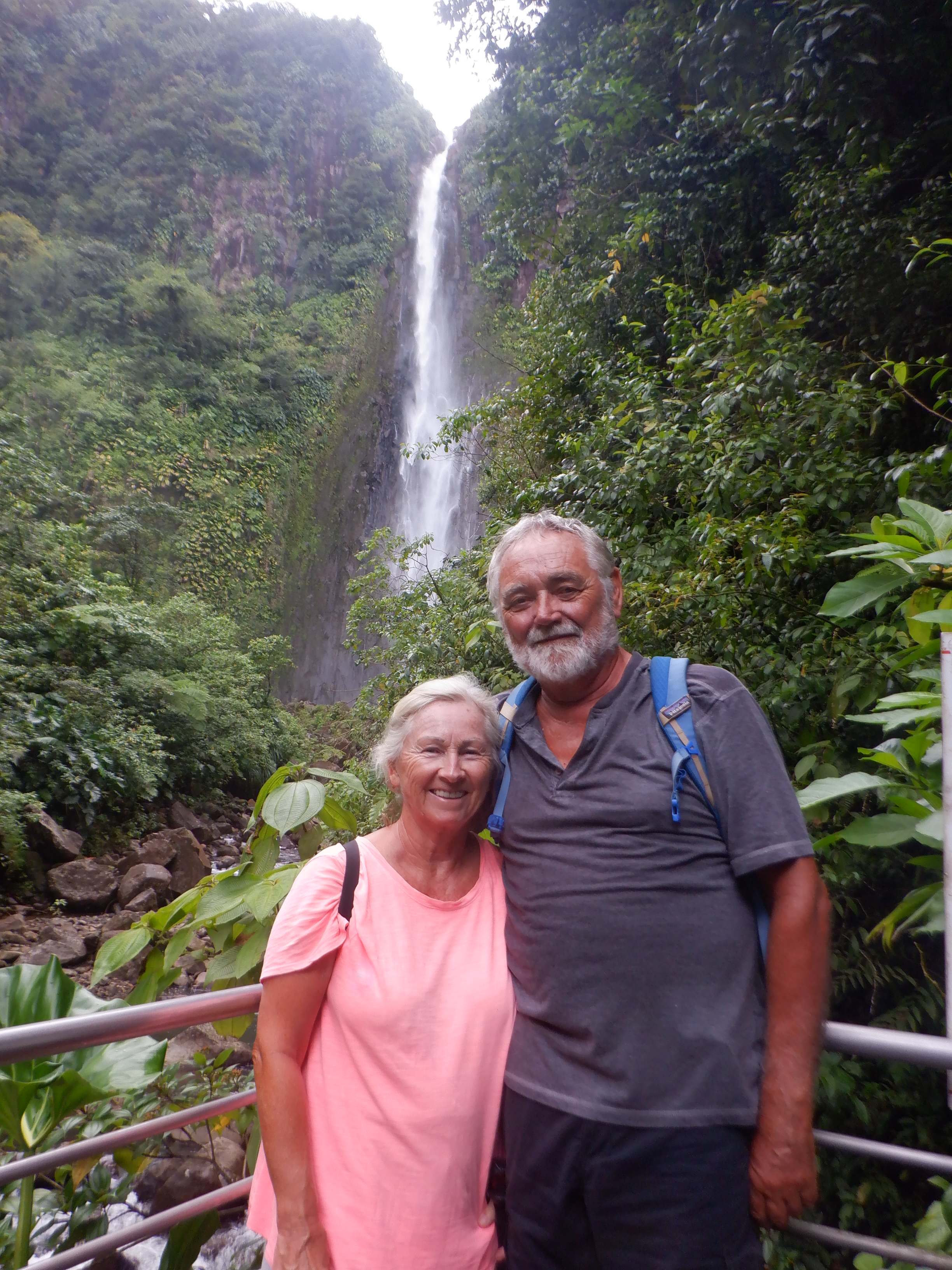
We still have a couple of days before our guests arrive, so we rented a car. We visited the obligatory waterfalls and trekked in the mountains. Nice, but Vinni and I agree that we have seen bigger, better and more isolated waterfalls and mountains. It takes a lot to impress us.
Rikke and Karsten show up and drop their anchor next to Capri. They have serious electrical problems. Their solar panels are not producing anywhere near what they should and their generator has stopped charging their batteries. They are both concerned, especially, since they paid a boatyard in Denmark an ungodly amount of money to mount and install all this.
Karsten and I crawl into the back of one of the aft cabins and start in on the solar issues. Rikke sits in the salon and listens as we measure, discuss, measure and discuss some more. Finally, she rises and says she is going over to Capri and have a “girl talk” with Vinni. Karsten and I measure some more.
The boatyard had seriously under dimensioned the solar system. With 1200 watts of solar panels, they had installed much too small wiring and a solar controller that was only rated for half the power the panels were producing. Both the controller and the wiring were so hot that we could barely touch them without burning our hands. At the same time, I could see that the wires were not connected properly. Everything was simply amateurish and it is difficult to believe a qualified electrician installed this as the boatyard claims.
We replaced all the wiring with new, much thicker wiring and immediately the wires cooled down and we were able to touch them. The controller was still so hot we couldn’t touch it. Karsten and Rikke are going to Denmark for a week or so within a couple of days and he will buy two new controllers to replace the single one the yard installed.
The generator issue was less of a problem to fix. The one installed was simply fried (I suspect it was just too small for the current produced by the generator). A boat supply store in the marina had a new one and once we installed that, everything worked. Of course, the wiring here also got much too hot, so Karsten had to install new wires from the charger to the batteries.
Ahhh, the joys (and expense) of boat ownership.
The next day they called and told us that never had the generator/charger produced so much electricity. When they came back from Denmark 10 days later and installed the new solar controllers, they were shocked by how much electricity the panels were producing. They had never seen them produce more than 50 amps and that only for short periods, now they were producing 80+ amps for hours. Wonderful that they now can sail without having to worry about electricity. I told them that I didn’t believe the electrician the yard had used to install the systems was a real electrician – he was undoubtedly a workman who had little knowledge of what he was doing. I also said they should demand to get their money back. The installation was so poor that there was a real danger of the boat catching fire.
Torben and Kristen showed up and we weighed anchor and set sail for Antigua. Antigua was just a “pitstop” since we have all been there before and there was nothing new for us. Although when I say nothing new, we arrived at the end of the annual Regatta and the harbor and bay were filled with enormous super and megayachts. Here we are talking about privately owned yachts over 100 meters long.
In my next life.
Barbuda
Barbuda is a small island that lies fairly isolated and therefore visited by few. Partially because it is isolated but also because there is nothing here. Only beach, beach and then more beach. And even more beach. The island is one long sand peninsula that lies atop a coral reef. The highest point on the island is 125 feet above sea level. When hurricane Maria came through here 8 years ago, she flattened everything on the island and all the inhabitants were evacuated, because the island was completely under water. They are back now but the island is still poor. In the past, they have lived by selling fish and their sand, which is highly prized as it is very white with fine corns.
Civilization has come to the island, despite the local population’s opposition. The island is part of Antigua and the authorities there have given permission for developers to build small hotels and private homes on the southern end of the island. A bigger airport is being built. The road into the hotel and private homes has a guard shack.
This idyllic island is becoming less idyllic and commercialism has reared its ugly head. Eve has eaten of the apple and this will become paradise lost.
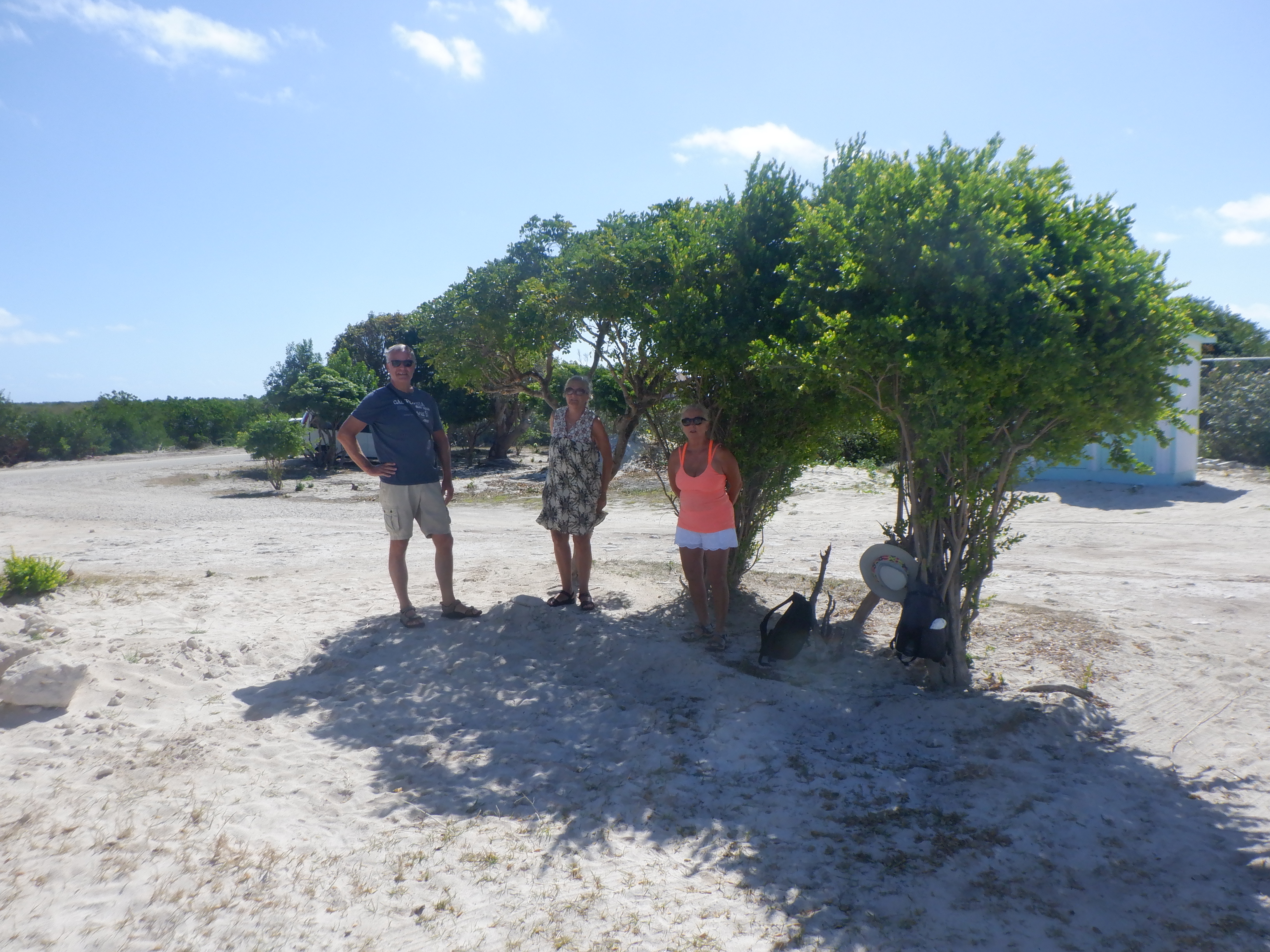
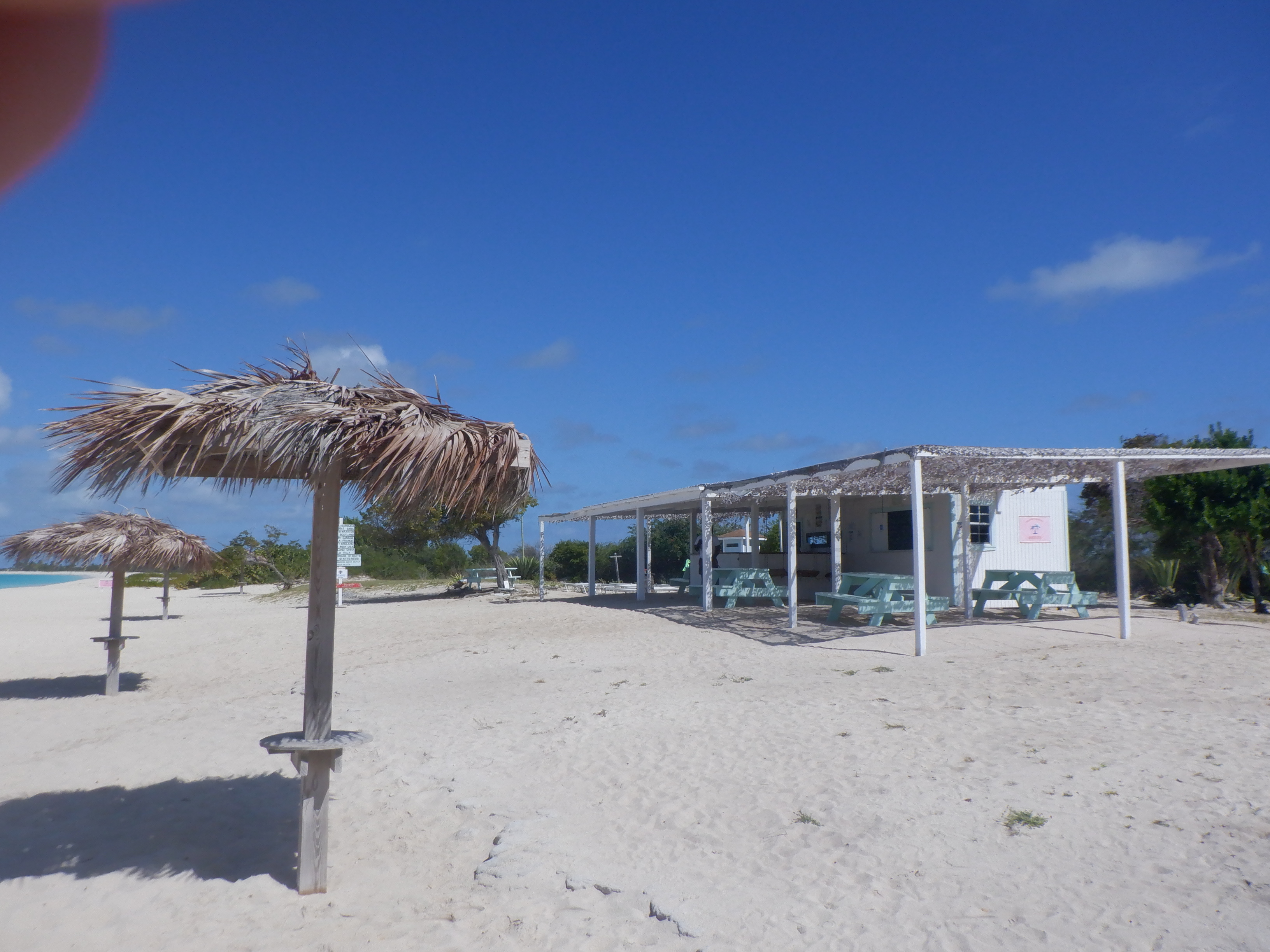
But, while building is going on, it hasn’t become endemic and there are still ungodly miles of empty white beach with no swells.
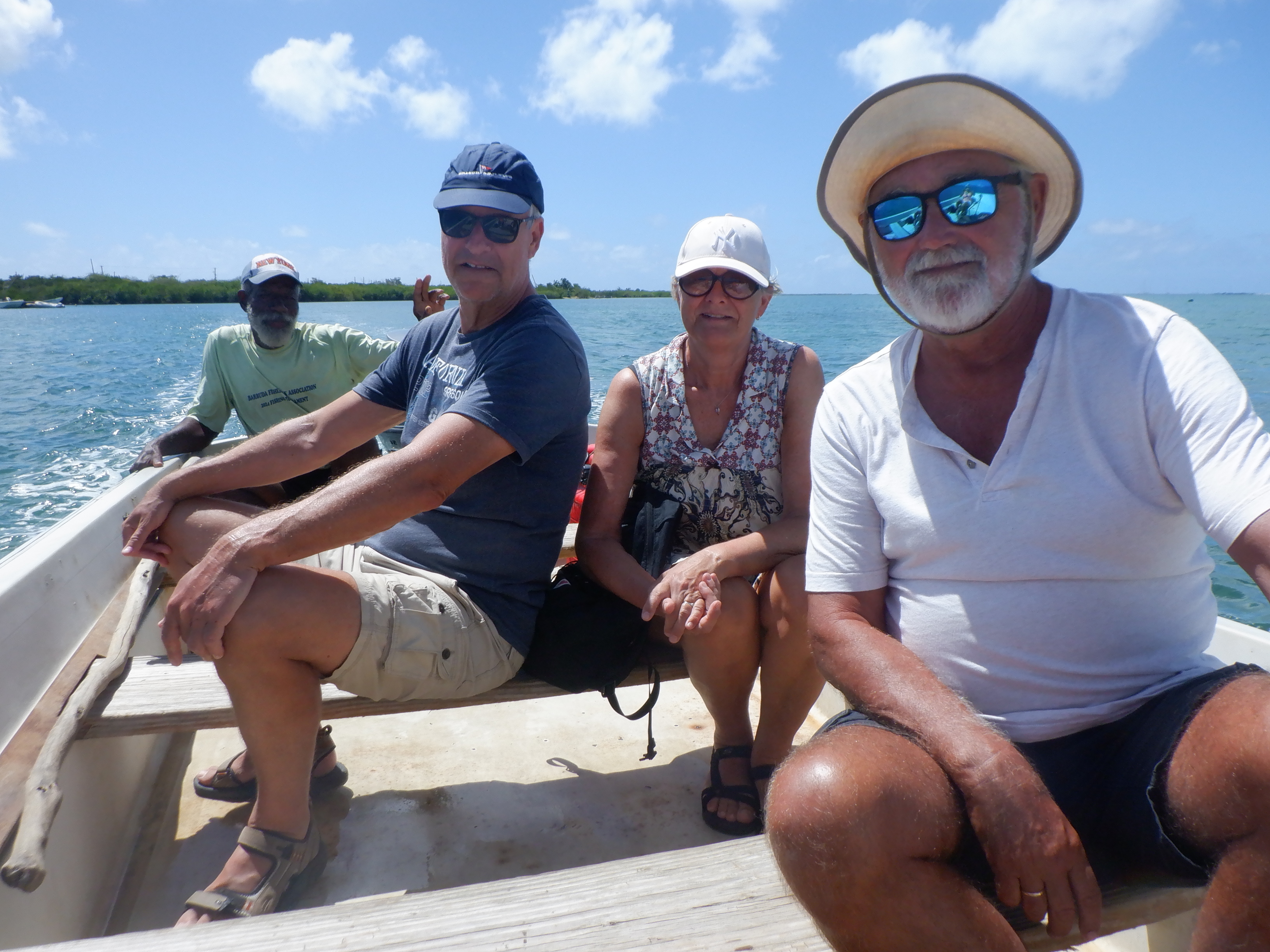
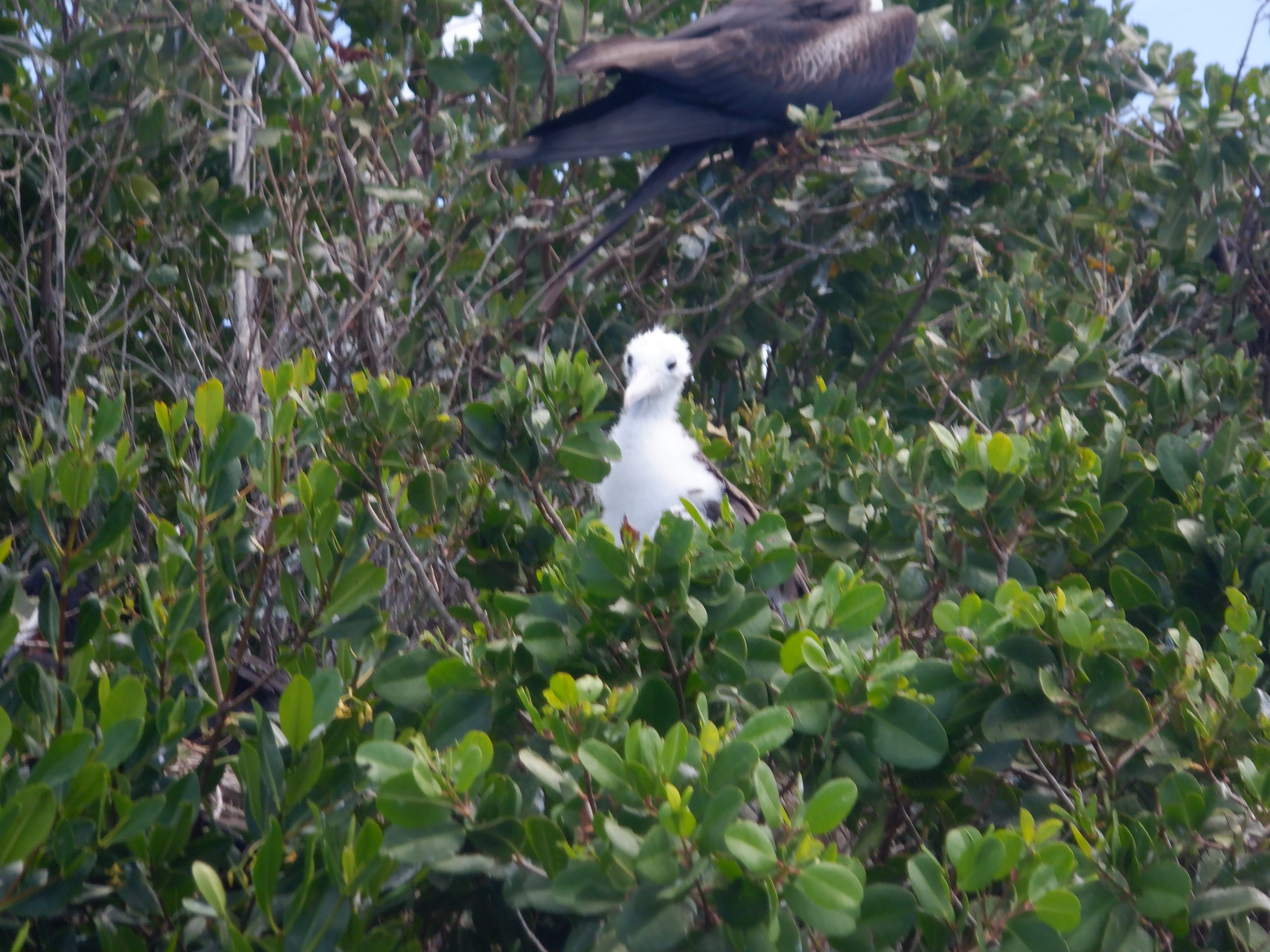
One of the world’s largest colonies of frigate birds lives here on Barbuda. Eight years ago, when hurricanes Maria and Irma roiled through here, the entire island ended up under water, the whole human population was evacuated. The frigates flew off and everyone was concerned that they would disappear and never come back. They came back and are thriving. The low-lying islands at the northern end of Barbuda are a national bird sanctuary and only those accompanied by a licensed guide are allowed in. We hired George, who turned out to be both knowledgeable and a repository of stories about the island and himself.
Frigate birds can soar for hours on end without landing. They are masters at dive-bombing other birds to get them to release their fish catch, which the frigate bird then steals, frequently catching it in mid-air. The males are easily spotted as they have a bright red “balloon” neck that they inflate to attract the females. When we entered the reservation, there were thousands of birds. No other place in the world can you get as close to them as here. We could literally reach out from the boat and touch them.

George also took us to the “pink beach” a long stretch of sand where the white sand is mixed with red coral granules, coloring the beach pink. Once again, a pristine beach stretching for miles with nary a soul on it.
Danes hungering for sun would flock to these beaches if they knew they exist.
We could have stayed and enjoyed more empty beaches, but we needed to sail onward to Anguilla.
Anguilla
Just north of St. Martin, lies Anguilla and just like Barbuda, it is off the beaten path, few come here. That is both good and bad. Good, because that means this island paradise is unspoiled, bad, because so few know about it.
There is only one customs office – Sandy Ground. We dropped the hook, launched the dinghy and sailed in. Everyone is smiling and friendly. The beach is every Dane’s dream. Turquoise water, pure white small sand kernels, almost like sugar, no swells and no people. There are a few beach bars here, but they don’t disturb the beach experience. We wandered around. Late afternoon and the customs office was closed. We needed to do a little shopping. There were no real stores on Barbuda and the small grocery store at English Harbor on Antigua was limited. We were told there was a supermarket at the top of the hill on the way into the capital city. Too far to walk. But the bartender at Jonnies said we could rent his car for a couple of dollars and off we went.


Anguilla was British at one point so they drive on the left hand side of the road. The bartender’s car was continental, meaning the steering was also on the left. That took some getting used to.
We got back without hitting anything, drank a couple of beers at Jonnies and dinghied back out to Capri. The next morning we took a speedboat out to Sandy Island, a small island that everyone tells us is as close to the Garden of Eden as you can come on this planet. Sandy Island is small. It only takes 5 minutes to walk around it. The sand is so white; it hurts your eyes to look at it, even with dark sunglasses on. The kernels are fine as the finest sugar. There is a bar there (they do know what they want for their food and drinks – but if you don’t like the prices, you are free to go elsewhere). There are also chaise-lounges, free for anyone to use. The snorkeling is supposed to be wonderful. I tried, but the surf was high and current over the reef so strong that I gave up. It was dangerous. No one else even tried.

Instead, we lay like beached whales and enjoyed the sunshine. A lot of sunshine. And even more sunshine. Our lunch was ok, but only ok. The beer was cold.

That evening we had dinner at one of the beach bars and enjoyed the sunset. Great sunset, but unfortunately no “green flash” since there was a sprinkling of clouds on the horizon.
The next morning we cleared in, rented a car and toured the island. The western end is where the tourists are. There are a few small hotels and even a top quality golf course. The beaches here stretch for miles, again sparkling white with fine kernelled sand. No swells to speak of, turquoise water, no people and what more can you dream of?
The eastern end of the island is wilder, with old coral reefs and few beaches. The swells are larger and the wind blows here. Actually, it was wonderful with a change.

We were more than a little impressed with Anguilla. The population is the friendliest we have met in the Caribbean. Everyone smiles a lot and is helpful. One item we noticed was that this is the first island we have seen where there are no bars on the windows or doors of the houses, meaning there is very little crime here. Fifteen thousand people live on Anguilla; generally, they are good-looking and thin.
We don’t expect to find another island we will like as much as we liked Anguilla. This island is what we all seek when we sail out. Few of us are lucky enough to find it.
Kirsten and Torben have reached the end of their holidays so we sailed the short distance (8 nm) over to St. Martin, had a good dinner and the next morning we set them off ashore at the taxi stand so they could go to the airport. They are going home to wet, cold, rainy Denmark while Vinni and I sail onward to find other sun-drenched Caribbean islands. For us it is BVI (British Virgin Islands), sun and snorkeling.


 s/v capri