he Virgins Islands were named such by Christopher Columbus (who named virtually all the eastern Caribbean islands). Since there were many small islands here, he named them Santa Ursula y Once Mil Virgenes (Saint Ursula and Her 11,000 Virgins) or The Virgin Islands for short.
There are two sets of Virgin Islands (just to add some confusion). The British Virgin Islands belong to the UK, but are a semi-independent territory. The U.S. Virgin Islands belong to the US, but once were Danish.
Confused? Don’t worry. This blog is about the British Virgin Islands.
We were here some eight odd years ago, immediately after the two hurricanes, Maria and Irma had hit. It was not a pleasant sight. Most of the buildings were destroyed, those that were left were without roofs or had other major damage. We checked in at Road Town, the capital, where the huge steel ferry had been thrown up on land and crushed the customs building. The marina was also destroyed, the water filled with the tops of masts, signifying the boats that were sunk there.
Further afield, on Joost van Dyke, all the restaurants were gone, people were living under the steps of their houses, because that was all that was left of their dwelling.
The good news, if one can call it that, is that the anchorages were all empty. The destruction was all-encompassing.
Eight years later, I’m pleased to say, virtually everything has been rebuilt. There few signs of the massive destruction we saw eight years ago.
This time, we checked in at Spanish Town, on Virgin Gorda. Everything here has been rebuilt. When we were last here, Spanish Town had ceased to exist. Clearing in was a long-term project with typical British bureaucracy. Four different windows to go to, a couple of them had to be visited twice. Long lines etc. etc. Vinni stayed on Capri (only Captains allowed to go on shore to clear in) and waited impatiently.
Once cleared in, we sailed off to Trellis Bay, to see if that had also been rebuilt. It had, but it actually was not very interesting. When we were here last Vinni discovered Painkillers and found out that the pain came the next morning.
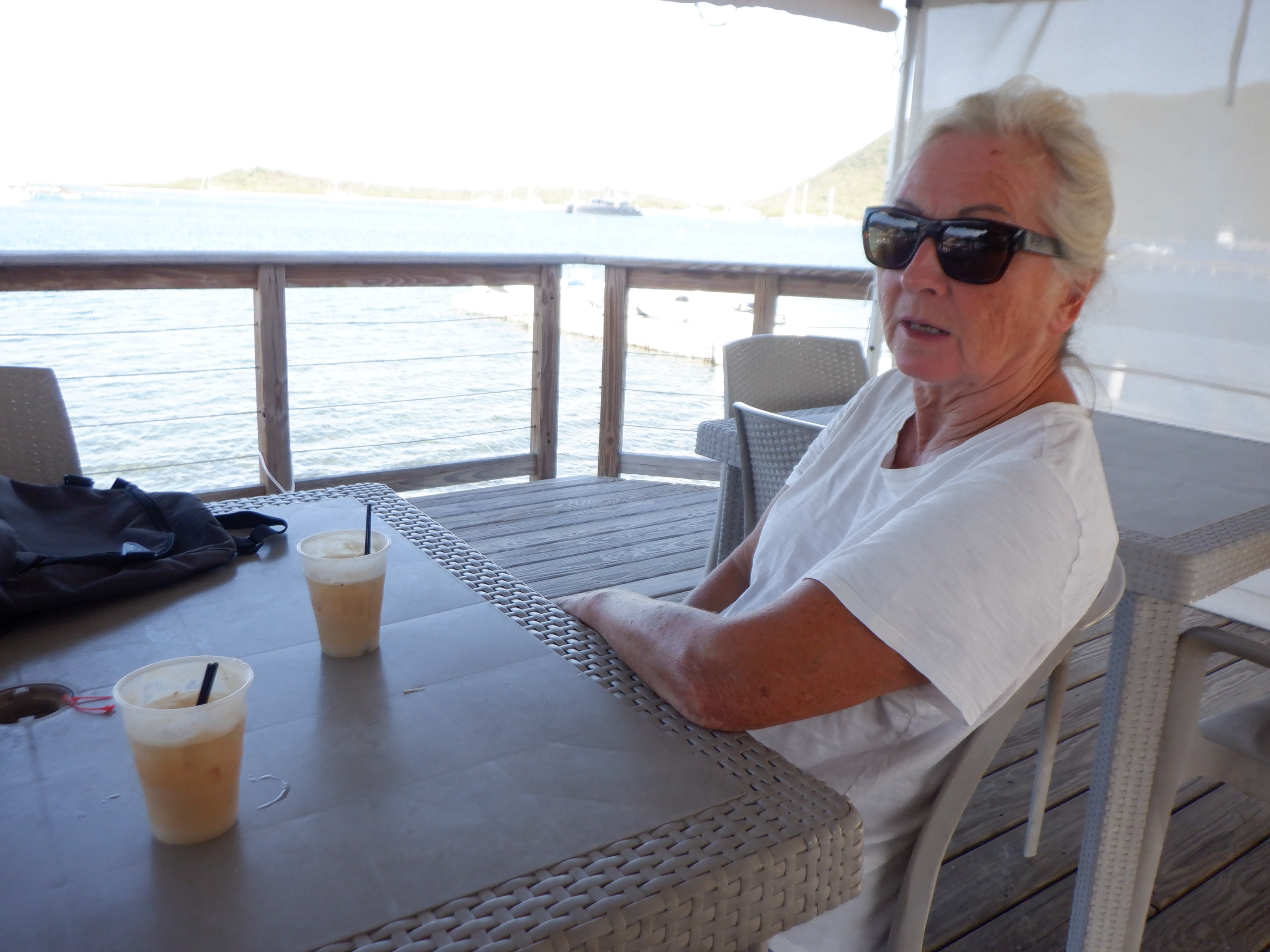
After a night there, we sailed off to see the other small islands, Peters Island and especially Norman Island.
Norman Island is special because it is also known as Treasure Island. Yes indeed, this is the island Robert Louis Stevenson wrote about when he penned Treasure Island.
The Virgin Islands were home to many pirates, most famous amongst them Captain Kidd and Blackbeard.
Pirates are known by many names, Pirate, Corsair, Freebooter, Buccaneer and many others. Buccaneers were, before they became pirates, Frenchmen who made an honest living selling smoked meat to passing ships. The smokehouses were called Boucans, a derivative of the Arawak Indians word buccan. The Spanish chased them off the few islands they inhabited and they became pirates or “Buccaneers”, preying on passing ships.
The word pirate stems from Latin, pirate, meaning sea robber.
The Virgins were a popular place for pirates. The Spanish treasure galleons loaded with Aztec and Inca gold and silver passed through here on their way to the Atlantic. Capturing a single ship filled with gold could enrich a crew so much that they could go home to England and live like lords, which a number of them did.
This piracy was encouraged by the British (and other Crowns) who issued Letters of Marque to Captains and ships. Letters of Marque were nothing more than a letter granting the ship a tenuous status as a private warship. These ships became known as privateers. For many of them, the Letter was a ruse to be used when they had to go to an established harbor for provisioning or repairs. They were in reality pirates.
The age of piracy ended in the early 1800’s. While the British, French and Danes didn’t mind the pirates attacking Spanish vessels, they frowned on their own being attacked. Most pirates of the day ended their days with a noose around their necks, publically hung, either from the yardarm of the ship that captured them or in the town square if they were brought back as prisoners.
So much for pirates – on to the Islands.
Our first stop after Trellis Bay was Peters Island. Peter Island is a privately owned island and therefore there are no facilities there for yachts.
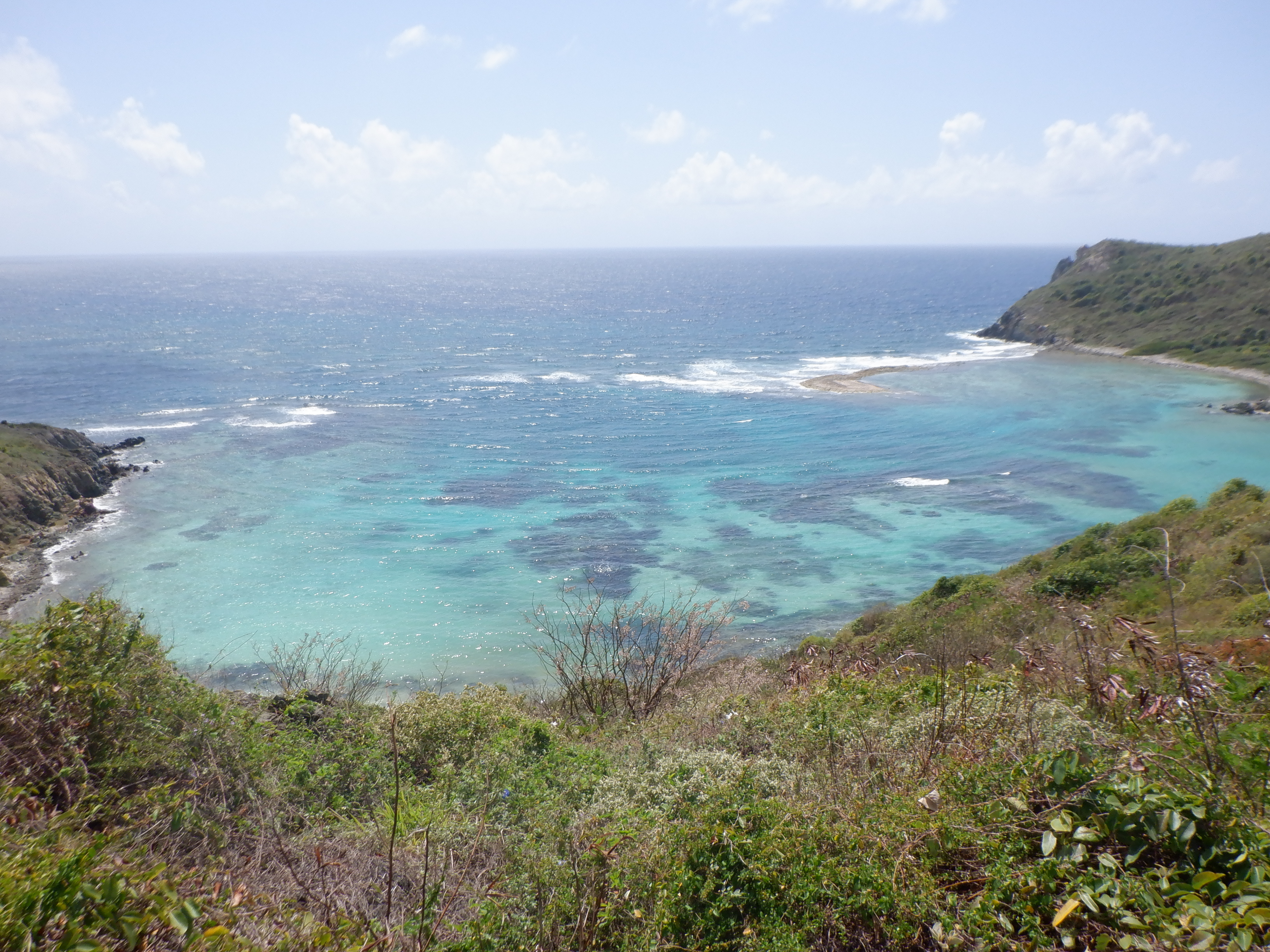
The anchorages are fine and almost empty (because all you can do is anchor – there is nothing on shore).
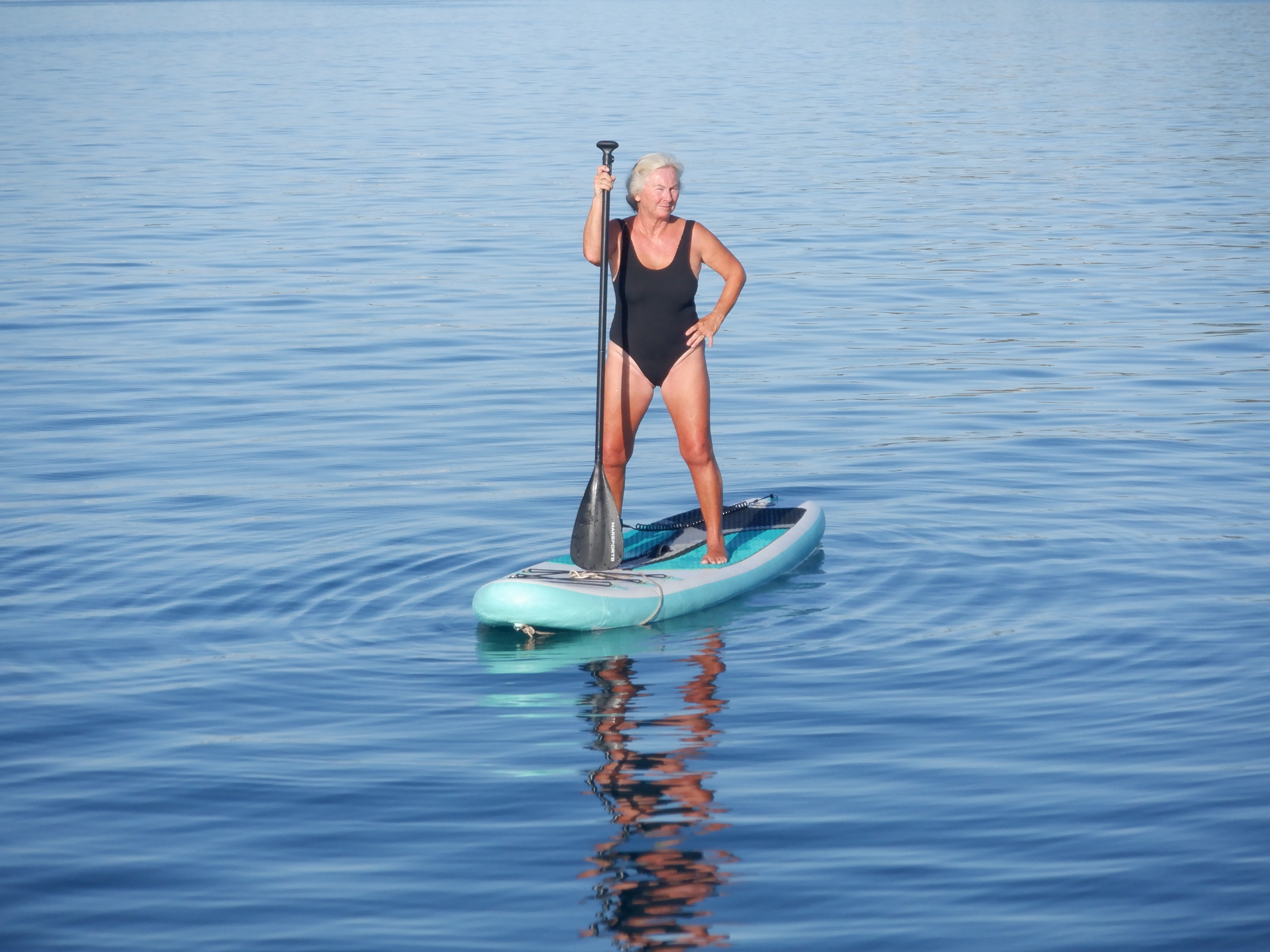
After a couple of nights, we sailed on to Norman Island, to go snorkeling for treasure.
Norman Island
As I wrote further up, Norman Island (named after Captain Norman, a pirate), is better known as Treasure Island. Legend has it that Blackbeard buried two chests filled with Spanish gold and silver here. No one knows where. In the early 1900’s, a two fishermen found a chest of Spanish gold coins in a cave on Norman Island, lending credence to the legend. Blackbeard was known to have frequented the island and anchored up in the bay known as The Bight.
Stevenson’s novel, Treasure Island is set here at the Bight. Long John Silver, Billy Bones, Jim Hawkins all come alive when you sail here. As we neared Norman Island, we sailed past Dead Chest (island). Dead Chest is named for a seaman’s coffin, which back in those days was called his Chest. Rumor has it that Blackbeard marooned 15 men on Dead Chest Island with only a bottle of rum. This legend gave rise to the old shanty:
15 men on a Dead Man’s Chest,
Yo, Ho, Ho and bottle of rum!
Drink and the Devil done the rest,
Yo, Ho, Ho, and a bottle of rum!
We decided that if the anchorage was good enough for Blackbeard, then it should be good enough for us. The anchorage is also right next to a place called Treasure Point where the caves are. Supposedly, the snorkeling is excellent and who knows? Perhaps we can find a chest of Spanish gold (dream on, Carsten).
As we sailed in, we were flabbergasted. The entire bay was filled with mooring buoys. There must have been at least 100 of them. Vinni and I always anchor so we didn’t need a buoy, but they were spaced so closely that finding a spot where we could drop the hook proved difficult. Finally, we found a space and quickly let our anchor down. As the afternoon wore on, the mooring balls all filled up with boats. Not just boats, but chartered catamarans. Vinni and I have a poor opinion of charter boats. Most of them (if not all) don’t know how to sail and can be dangerous to be near. Many of these catamarans were 50 feet and larger – skippered by a professional skipper and had a hostess on bard who served drinks and meals. They were floating hotels. Not the best of company for us and certainly not the solitude we like.
On shore, there were two restaurants and several hundred deck chairs for lounging in the sun. As it became evening, lots of music and noise.
Hmmm – do we want to stay here?
We did, mainly because we wanted to snorkel out by Treasure point. The next morning we set out in the dinghy and around the point. Early morning and we wanted to get in some good snorkeling and maybe, just maybe, find that other chest of gold. My God, dinghies everywhere, hundreds of people in the water snorkeling at the caves. It was a madhouse. We took one look and turned around, back to Capri and weighed anchor.
We fled the Bight and made our way to Soper’s Hole on Tortola. When last we visited Soper’s Hole, it, like everything else in BVI was destroyed. Pusser’s Landing had managed to set up a draft beer and a weber grill and were in business. As I recall the food was good and the beer cold.

Now it had all been rebuilt, the buildings were new. A small, but well stocked supermarket was open as was everything else.

We provisioned, rented a car and drove around Tortola, had dinner at Soper’s and generally did nothing for a few days. The end cap on our watermaker decided to start leaking. Fortunately, there was a repair shop on the island that had the spare part, so aside from having to spend a couple of hundred dollars; it was not a major issue.


We set sail for Joost van Dyke, a small island just north of Tortola. Joost van Dyke (named for the Dutch pirate Captain Joost van Dyke) is famous for Foxy’s bar and in another bay, the Soggy Dollar Bar. We anchored up in Great Harbor, home of Foxy’s. Once again, the harbor was filled with mooring balls and charter catamarans. Really not our style. But you have to visit once you are here. Just around the point lies White Bay and the Soggy Dollar Bar. We took the dinghy around the point. The reason the bar is called Soggy Dollar is that you anchor up and swim to shore buying your drink with the dollars you have in your bathing suit, thereby paying with “soggy dollars”.
We were overwhelmed. The bay was tightly packed with boats. The beach and bar overflowing with people. Ok, here we were, this is a well-known attraction amongst cruisers, so we had lunch and some beers. We didn’t pay with “soggy dollars”, we used a credit card.
We spent a couple of weeks in BVI. The islands are blessed with many pure white beaches, warm turquoise waters. But as far as we are concerned, most of it is spoiled by the hundreds of chartered catamarans that fill the bays. We will not come back here.


 s/v capri